
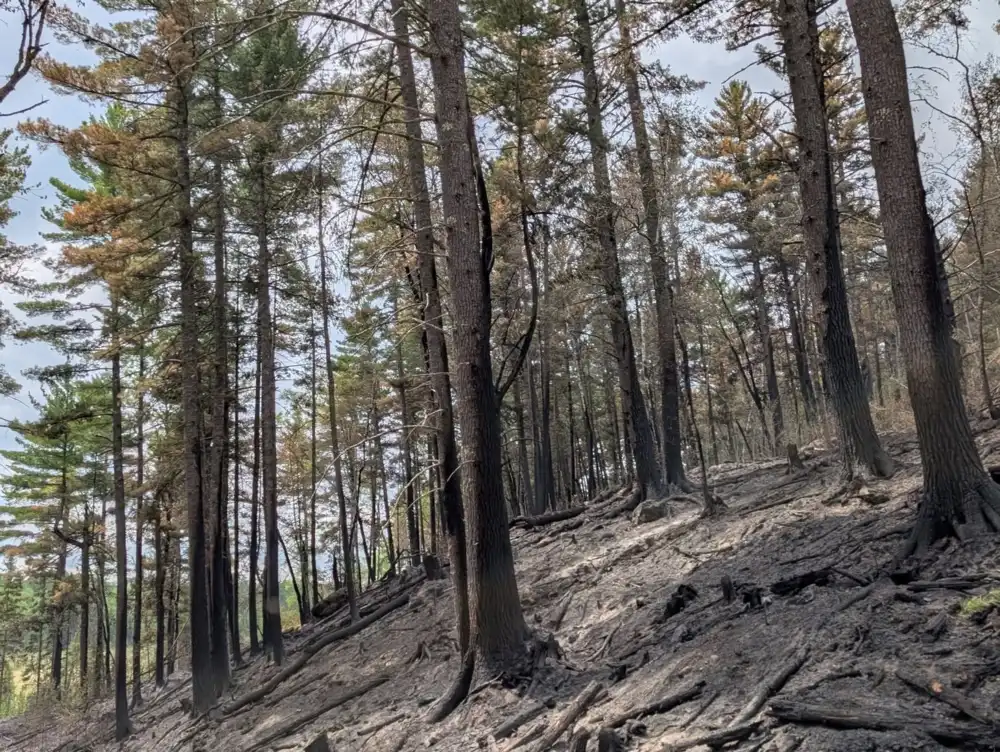
When a fast-moving blaze erupted near the pristine waters of Burntside Lake early this June, initial public concern focused heavily on containment and regional safety. The incident, quickly designated as the Birch Bay Fire, rapidly consumed roughly 33 acres of dense forest eight miles northwest of Ely, Minnesota. While emergency response teams moved efficiently to achieve total containment, regional environmental analysts and state regulators turned their attention toward long-term resource protection. In an era where shifting climate patterns place severe stress on regional water basins, the broader implications of forest land degradation are increasingly linked to watershed health and regional water resource management. Managing the immediate landscape around these water bodies remains critical, as localized ecological disruptions can have cascading impacts on adjacent hydrological systems.
According to a formal investigation by the Minnesota Department of Natural Resources, the wildfire likely originated from chainsaw operations conducted by U.S. Forest Service crews. Field reports indicate that personnel were actively executing essential wildfire fuel-reduction and prescribed-fire preparation tasks within the Geraldine Prescribed Fire project area. State fire investigators noted that hot engines, intense exhaust heat, or mechanical sparks from heavy equipment can easily ignite dry grass and forest debris under near-critical weather conditions. While these clearing efforts are fundamentally designed to mitigate massive wildfire risks, independent experts in environmental consulting note that unintentional ignitions highlight the delicate balance required when managing sensitive wilderness zones.
The immediate aftermath of the blaze has prompted minor stabilization work, such as establishing water bars on affected slopes to prevent severe soil erosion during subsequent rain events. Forest ecologists emphasize that maintaining a stable canopy and preventing topsoil loss is vital to safeguarding the purity of local runoff feeding the state’s aquatic corridors. Although this specific rural incident does not directly mirror the municipal pressures of the urban heat island effect, which traps severe thermal energy within asphalt grids, both scenarios present unique challenges to local conservationists. Unregulated runoff and canopy loss can alter shallow water tables, mirroring the way heavy metropolitan infrastructure can lead to localized groundwater temperature rises that disrupt fragile subterranean ecosystems.
Moving forward, federal authorities have expressed a clear commitment to absolute transparency regarding the preliminary investigation findings, promising to evaluate internal safety standards for future preventative operations. For the vibrant regional communities, including local seasonal residents and conservation advocates, the incident underscores the growing necessity for comprehensive ecosystem tracking. Analysts suggest that future public policy must balance aggressive brush clearing with heightened climate awareness, ensuring that preventative forestry tactics do not inadvertently jeopardize the delicate land and water resources that define the region.