
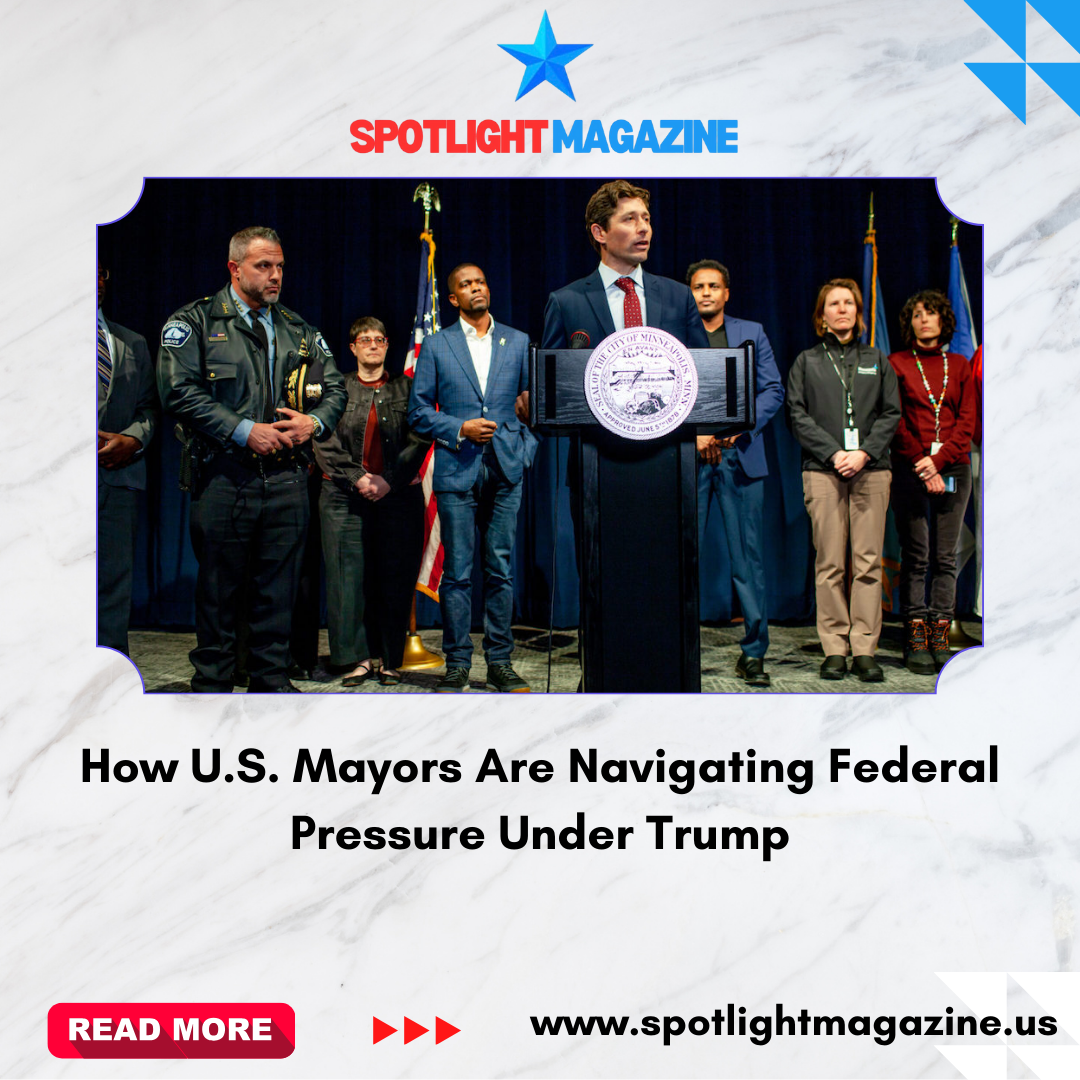
Mayors across the United States are finding themselves in a difficult position as President Donald Trump and his administration push harder on federal priorities like immigration enforcement and threaten to link federal funding to local cooperation.
At a major gathering of city leaders in Washington, D.C., Minneapolis Mayor Jacob Frey delivered a blunt message to his fellow mayors. After federal immigration agents killed a Minneapolis resident during an enforcement action, Frey urged other mayors to speak out against what he sees as federal overreach and stand up for their cities. He told his peers that they shouldn’t back down to what he called bullies and should defend democratic principles in the face of national pressure.
But Frey’s vocal, confrontational stance isn’t the only way city leaders are responding. Mayors hold jobs that are officially nonpartisan, and their main responsibilities—like fixing potholes, managing snow removal, and keeping residents safe—don’t always leave room for big political fights. Many mayors are weighing how loud or public their disagreements should be, knowing that pushing back too hard might risk federal support or create tension with national leaders.
Federal funding matters a lot to cities. Money from Washington helps support local programs, infrastructure projects, and essential services. Trump has signaled that cities which resist federal priorities like immigration enforcement might receive fewer resources. That has made some mayors cautious about how they approach disagreements.
Plainfield, New Jersey, Mayor Adrian Mapp described how some issues, especially immigration law enforcement that affects residents’ families, feel deeply personal and political. In places where immigrant communities are central to city life, local leaders say constituents expect them to push back against policies that the community finds harmful. Mapp said residents want assurances that mayors are doing everything they can to protect and support residents, especially when federal actions could hurt families or create fear.
Other mayors take a different approach, choosing to stay focused on everyday city tasks and not on national political battles. Chris Jensen, mayor of Noblesville, Indiana, pointed out that most problems mayors deal with every day aren’t partisan—they are practical. Snow still needs to be plowed, roads need maintenance, and trash still needs to be collected, regardless of national politics. Jensen said local leaders should work with whoever is in power to secure necessary resources, and that federal officials could benefit from listening more closely to local data and priorities.
At the conference in Washington, many mayors talked about tensions with the federal government. While they didn’t always mention Trump by name, they described increased pressure around immigration enforcement, the possible deployment of National Guard troops, and the threat of having federal funding cut if cities don’t align with federal policies.
In some cities, mayors have tried mixing cooperation with advocacy. For example, New Orleans Mayor Helena Moreno talked directly with Trump about her city’s real needs, like infrastructure funding, while also pointing out that New Orleans’ homicide rate is at its lowest in decades. Moreno said meeting face-to-face helped shift the conversation toward local priorities rather than national political conflict.
New York City’s newly sworn-in mayor, Zohran Mamdani, said his administration will continue to defend the city’s interests even when national policies threaten its funding. In some cases, mayors have met with the president, hoping that personal dialogue might open paths to cooperation while still asserting their city’s needs and values.
Other mayors have taken steps to limit federal enforcement actions in their cities. San Francisco’s mayor persuaded the White House to pause a surge of immigration agents by explaining that the city was doing well enough that additional federal action wasn’t necessary. Portland’s mayor has publicly pushed for immigration agents to leave his city entirely. Those efforts reflect a mix of confrontation, negotiation, and local advocacy.
Some mayors, including those in Boston and Newark, are pursuing broader accountability efforts for federal law enforcement actions and are working with regional leaders to change how cooperation with immigration agents functions. Chicago’s mayor has taken steps to increase local oversight of federal immigration officers in his city.
Cincinnati’s mayor summed up a feeling shared by many city leaders: the growing role of partisan politics and federal power is reshaping what it means to run a city. He pointed out that these issues affect trust between different levels of government and change how mayors think about their roles—not just in daily services but in broader political engagement.