
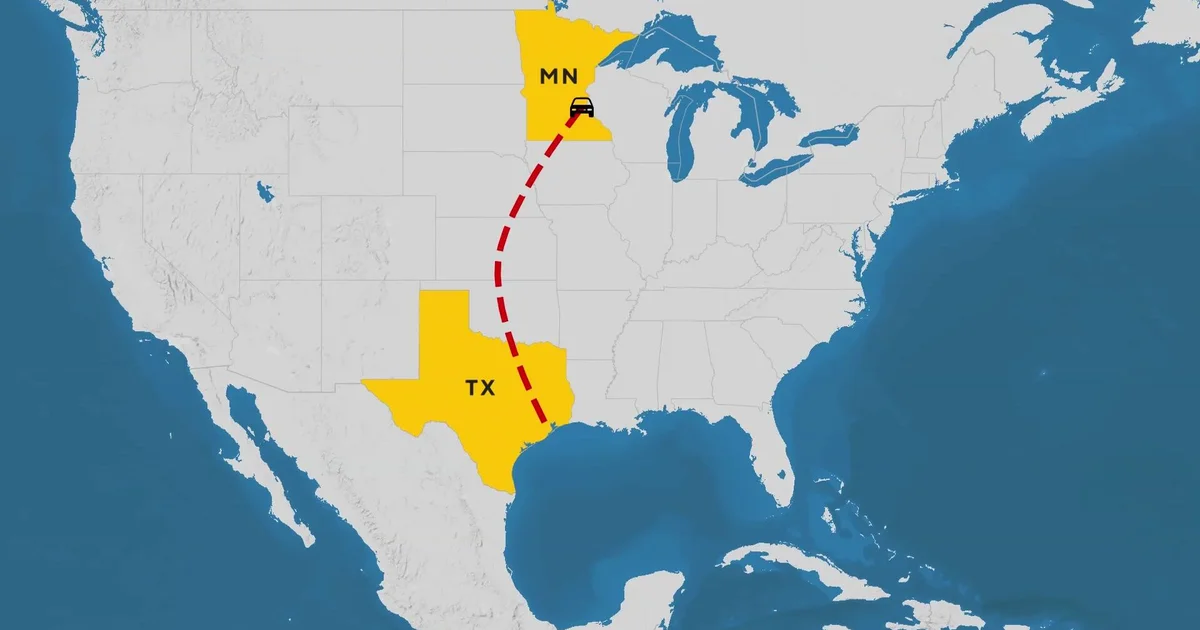
The ICE detention case Minnesota has drawn widespread attention after three volunteer drivers helped bring a woman and her mother back home to Minnesota following their release from immigration custody in Texas. The journey, spanning more than a thousand miles, highlights both the human impact of immigration enforcement and the role of community support networks in navigating complex legal and logistical challenges.
The two women had been detained by U.S. Immigration and Customs Enforcement in Texas, where they were held as part of ongoing immigration detention USA procedures. Their case reflects a broader pattern in which individuals are often transferred far from their home states, making reunification with family and legal support systems more difficult.
Following their release, the ICE detention case Minnesota took a hopeful turn when three volunteer drivers stepped in to assist with transportation. The group coordinated the long-distance journey back to Minnesota, ensuring the women could safely return to their community after weeks of uncertainty. Advocates say such efforts are increasingly common, as grassroots networks work to fill gaps in support for immigrants navigating the system.
Legal experts note that ICE custody release does not automatically resolve the challenges faced by detainees. Many individuals must still attend court hearings, comply with immigration requirements, and rebuild disrupted lives. The physical distance between detention centres and home communities can add further strain, particularly for families with limited resources.
The Minnesota immigrant community, one of the largest and most active in the United States, has played a key role in supporting affected individuals. Community organisations and volunteers often provide housing, legal referrals, and transportation assistance, reflecting a broader culture of solidarity among immigrant groups in the region.
The Texas to Minnesota journey undertaken in this case underscores the logistical complexities involved in immigration cases. With limited official assistance for post-release travel, many rely on personal networks or volunteer efforts to bridge the gap. While such initiatives offer immediate relief, advocates argue that systemic changes are needed to address the underlying issues within US immigration issues.
Officials from immigration authorities maintain that detention and transfer policies are guided by operational and legal considerations. However, critics argue that these practices can have unintended consequences, including prolonged separation from support systems and increased hardship for detainees.
The ICE detention case Minnesota ultimately highlights a deeply human story within a complex policy landscape. While the successful return of the woman and her mother offers a moment of relief, it also serves as a reminder of the broader challenges facing immigrants across the United States.
As debates over immigration policy continue, stories like this bring attention to the lived experiences behind the headlines. For many, the journey from detention to home is not just a physical one, but an emotional and legal process shaped by resilience, uncertainty, and the support of others willing to help.