
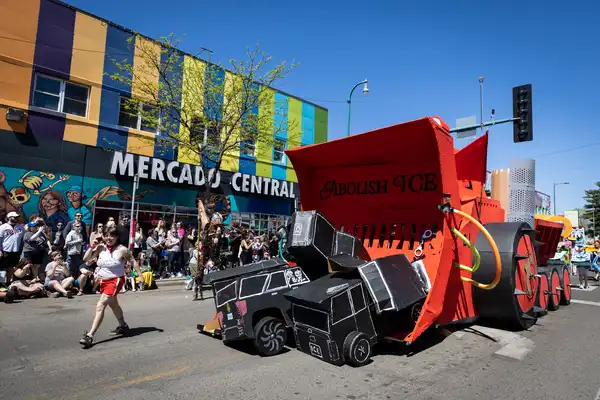
The Mayday festival Minneapolis ICE surge has reshaped this year’s traditional spring celebration in Minneapolis, turning what is usually a vibrant cultural gathering into a moment of reflection and collective grief. According to organizers and local reports, the 2026 May Day events carried a noticeably different tone, as communities gathered not only to celebrate the arrival of spring but also to mourn neighbors affected by ongoing immigration enforcement operations in the region.
The annual May Day festival in Minneapolis is a long-standing community event rooted in art, music, and public participation. However, this year’s edition took place against the backdrop of heightened tensions linked to federal immigration enforcement, including expanded ICE operations in Minnesota. Reports suggest that community groups used the occasion to highlight concerns about the impact of enforcement actions on immigrant families, many of whom have reportedly reduced public activity due to fear and uncertainty.
Organizers emphasized that the festival remains a community-driven event focused on solidarity and social awareness. In statements shared with local media, they described the gathering as both a celebration and a space for acknowledging shared loss. The Minneapolis May Day 2026 activities reportedly included performances, marches, and community art installations that reflected themes of displacement, resilience, and belonging.
The broader context of ICE enforcement Minnesota has become central to public discourse in the state over the past year. According to multiple reports, increased immigration enforcement activity has led to heightened anxiety in immigrant communities, with some advocacy groups alleging disruptions to daily life, including attendance at schools, workplaces, and community events. Authorities, however, have maintained that enforcement actions are targeted and part of broader federal immigration policy.
Against this backdrop, the May Day festival Minneapolis ICE surge narrative reflects how cultural events are increasingly intersecting with political and social issues. Observers note that festivals like May Day have historically served as platforms for civic expression in Minneapolis, often blending artistic celebration with advocacy on labor rights, housing, and social justice.
This year, participants reportedly honored individuals and families affected by recent enforcement-related tensions through symbolic performances and community storytelling. While no official casualty list or confirmed figures were associated directly with the festival, organizers framed the event as a space to acknowledge “neighbors lost or displaced,” a phrase widely interpreted as reflecting broader community experiences rather than specific verified incidents.
Public reaction has been mixed, with some residents praising the festival’s reflective tone and others preferring a focus on its traditional celebratory character. Nonetheless, the event underscored how immigrant community impact Minneapolis has become a defining issue in local civic life, shaping both cultural expression and public conversation.
As Minneapolis continues to navigate debates around immigration policy and enforcement, the May Day festival stands as a reminder of how deeply national policy discussions can resonate at the community level. This year’s gathering suggests that celebration and mourning are increasingly intertwined in the city’s evolving social landscape.