
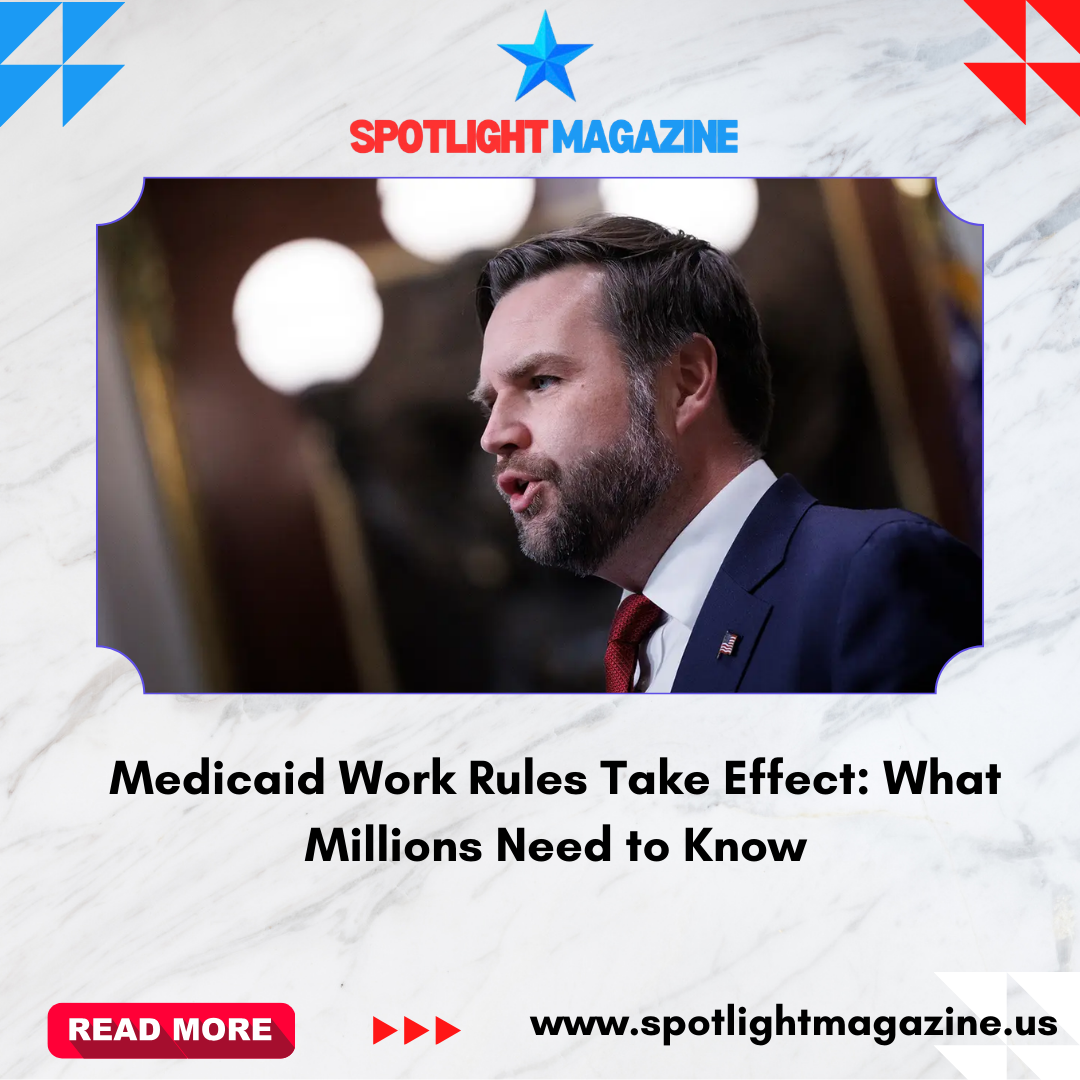
Medicaid is the government health coverage program that helps low-income people, children, families, pregnant people, older adults, and people with disabilities pay for doctor visits, hospital stays, prescription drugs, and more. In 2025, Congress passed a major new law that will change how Medicaid works for many adults. The goal of the law is to reduce federal spending, and part of that involves adding rules that people must meet to qualify for Medicaid coverage.
For the first time in a long while, the United States is introducing a work-based requirement for certain Medicaid recipients — meaning that some adults must show they are working or doing qualifying activities in order to get or keep their health insurance. Under these new rules, people aged 19 to 64 in states that expanded Medicaid will generally need to document at least 80 hours of work, volunteering, job training, education, or similar activities each month. This requirement will start being enforced in most places by January 1, 2027, though some states are already planning or experimenting with early implementation, and others may delay if they get federal approval.
People already enrolled in Medicaid because of very low income or disability face big changes. Before, many adults could get coverage without proof of income or work history beyond meeting eligibility rules. Now, states will have to redetermine eligibility more often — at least every six months instead of once a year — and check whether someone has met the work or community engagement requirement. That means states will ask more questions more often and require people to supply more documentation to stay covered.
This shift is meant to save money in the federal budget. Estimates suggest that these work rules and other changes in the law could cut hundreds of billions of dollars from Medicaid spending over the next decade. However, experts warn that the complexity of reporting hours and verifying compliance could inadvertently push people off the program — even some who are already working or trying to find work — simply because they lack the tech, paperwork, or communication from the state systems.
States have some control over how the requirements work in practice. They can offer exemptions for people who are disabled, pregnant, primary caregivers, in school, veterans with disabilities, or facing short-term hardships like homelessness, and they have a deadline to build systems that track all this data. But setting up these systems is costly and complicated. Some states may need new technology, more staff, or outside contractors to manage eligibility checks and compliance tracking. Even with federal guidance and some funding provided, many Medicaid administrators say the deadline is tight and the process burdensome.
Research and past experience with work requirements offer clues about what might happen once these new rules are in place. Earlier work requirement programs in states like Arkansas and Georgia didn’t lead to big increases in employment but did cause people to lose coverage because they couldn’t complete the paperwork or meet tight reporting deadlines. These examples show that requiring people to demonstrate work or community engagement doesn’t always work as intended and can lead to coverage disruptions.
Supporters of the work requirements argue that they encourage self-sufficiency and ensure Medicaid resources go to people who are actively working or engaged in their communities. They believe the rules will motivate people who can work to take steps toward employment or training. Critics, however, worry that many adults on Medicaid already work low-wage or part-time jobs and that the real risk lies in bureaucratic hurdles and increased paperwork rather than lack of effort. They also point out that losing Medicaid coverage can be harmful to health, especially for people with chronic conditions who need regular care.
The bottom line is that beginning in 2026–2027, Medicaid will look different for many adults. The new law aims to tighten eligibility rules by tying coverage to work or engagement — and states are gearing up for major changes in how they manage enrollment, eligibility checks, and compliance reporting. While this reform is framed as cost-saving and encouraging productivity, it could also make it harder for some people to obtain and keep health coverage unless states build systems that are simple to navigate and easy to understand.