
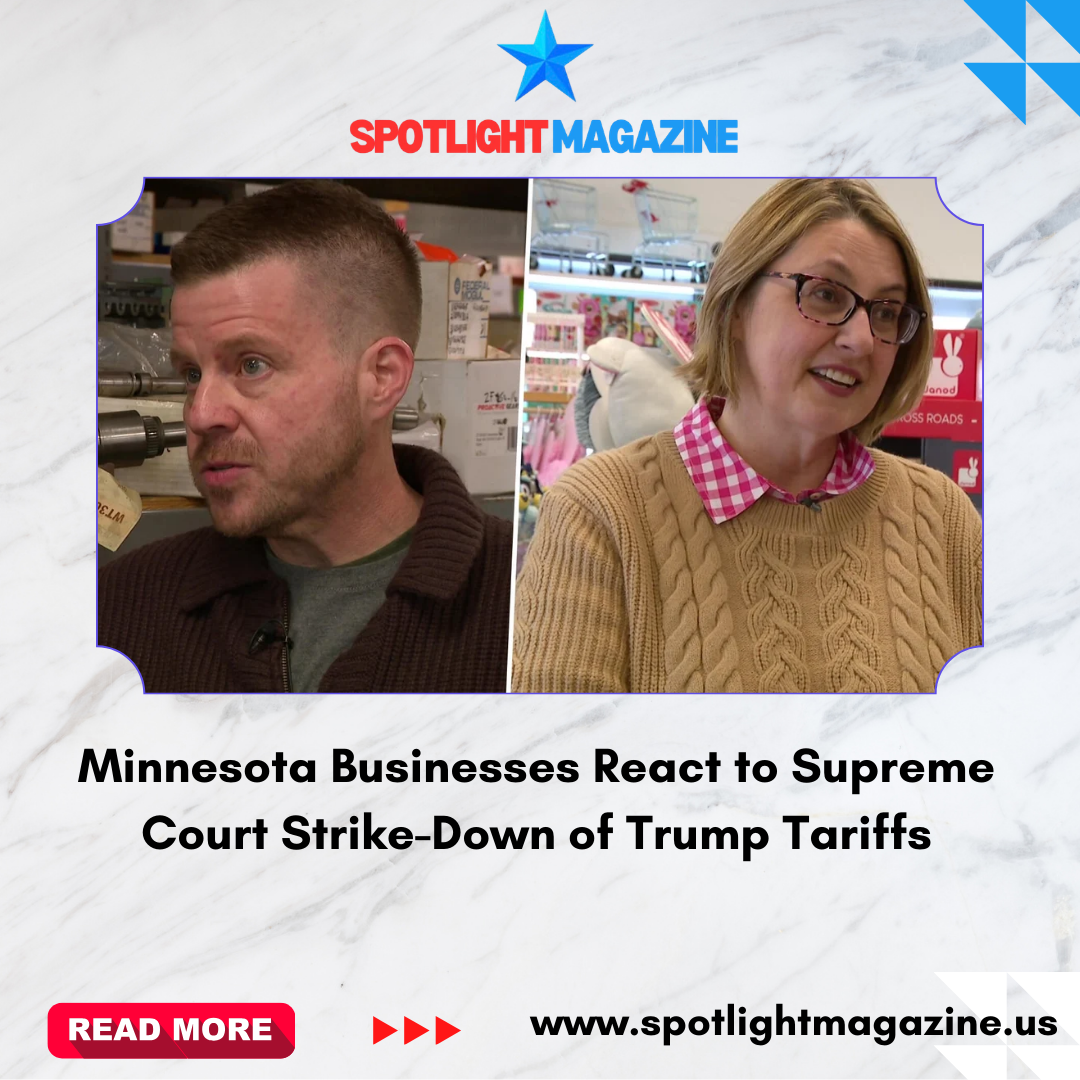
A recent decision by the U.S. Supreme Court is forcing many Minnesota business owners, farmers and shoppers to rethink how they deal with higher costs tied to import taxes put in place by former President Donald Trump.
On Friday, the Supreme Court ruled that Trump did not have the legal authority to use a federal emergency powers law to impose broad tariffs — or import taxes — on goods from countries around the world. These tariffs were originally justified by the Trump administration as a response to trade imbalances and other policy goals, but the court said the president can’t impose such wide-ranging taxes without approval from Congress. Instead of stopping there, Trump quickly announced a new 10% global tax using a different power, but many experts worry this may just create more uncertainty in the economy.
In Minnesota, the effects of the old tariffs have already been felt. At Lisbon Twin City Auto, vice president of operations Trent Eisenberg explained how the cost of automotive parts imported from other countries has soared. He pointed to a particular motor that used to cost around $430 about a year ago but now approaches $1,000 once it’s shipped into the United States. Parts that were once affordable have become much more expensive, making it harder for repair shops to keep prices down.
The changes haven’t just affected auto shops. Farmers are also feeling the impact. Ryan Mackenthun, a Minnesota farmer, said rising costs have forced him to adjust what he plants in his fields. Mackenthun said that as expenses go up, people in many industries are feeling squeezed, and he expects that eventually regular families might notice the effects in their own wallets.
Small business owners selling products made overseas have had mixed reactions to the Supreme Court’s ruling. Amy Saldanha, who owns a Minnesota toy business called Kiddywampus, said that while she was glad about the ruling, her prices won’t drop immediately. Saldanha explained that her inventory is already on the way and that it might take six months to a year before any real relief in pricing shows up. That’s because even if tariffs disappear today, the goods already produced and shipped still carried higher costs.
For some in the toy industry, the tariffs made doing business much harder. Abigail Adelsheim-Marshall, co-owner of Mischief Toy Store in St. Paul, said about 90% of their products are made in China. She said the global tariffs were “brutal” for her store and that they had joined a lawsuit arguing that the tariffs on Chinese goods were unlawful. Adelsheim-Marshall noted that prices for popular items increased by about 10% to 20%, and those higher prices are almost always passed on to customers. Some suppliers in Europe and Canada were also out of reach because of the added costs.
While the Supreme Court decision may offer a legal victory for small business owners and farmers, there’s no quick fix for the rising costs that many have already experienced. Even though the broad emergency-powers tariffs were struck down, the Trump administration’s new plan to levy a 10% global charge and possible use of other tariff laws means uncertainty still lingers. Economists worry that this on-again, off-again trade policy could continue to create volatility in prices and global trade relationships.
In addition to the legal battle, other organizations have weighed in on the broader impact of these tariffs. Nonpartisan groups such as the Tax Foundation have said the tariffs amounted to one of the largest tax increases in decades and could cost the average U.S. household about $1,300 this year alone. A survey of small businesses also found that a large majority planned to raise prices to try to absorb the cost of tariffs rather than cut into profits.
For many business owners in Minnesota and beyond, the Supreme Court’s decision is a step toward fairer trade rules, but it doesn’t reverse the financial pressure that higher import costs have already created. Business leaders say that as the legal and political processes continue, it will likely take time before there’s real economic relief and more predictable trade policy.