
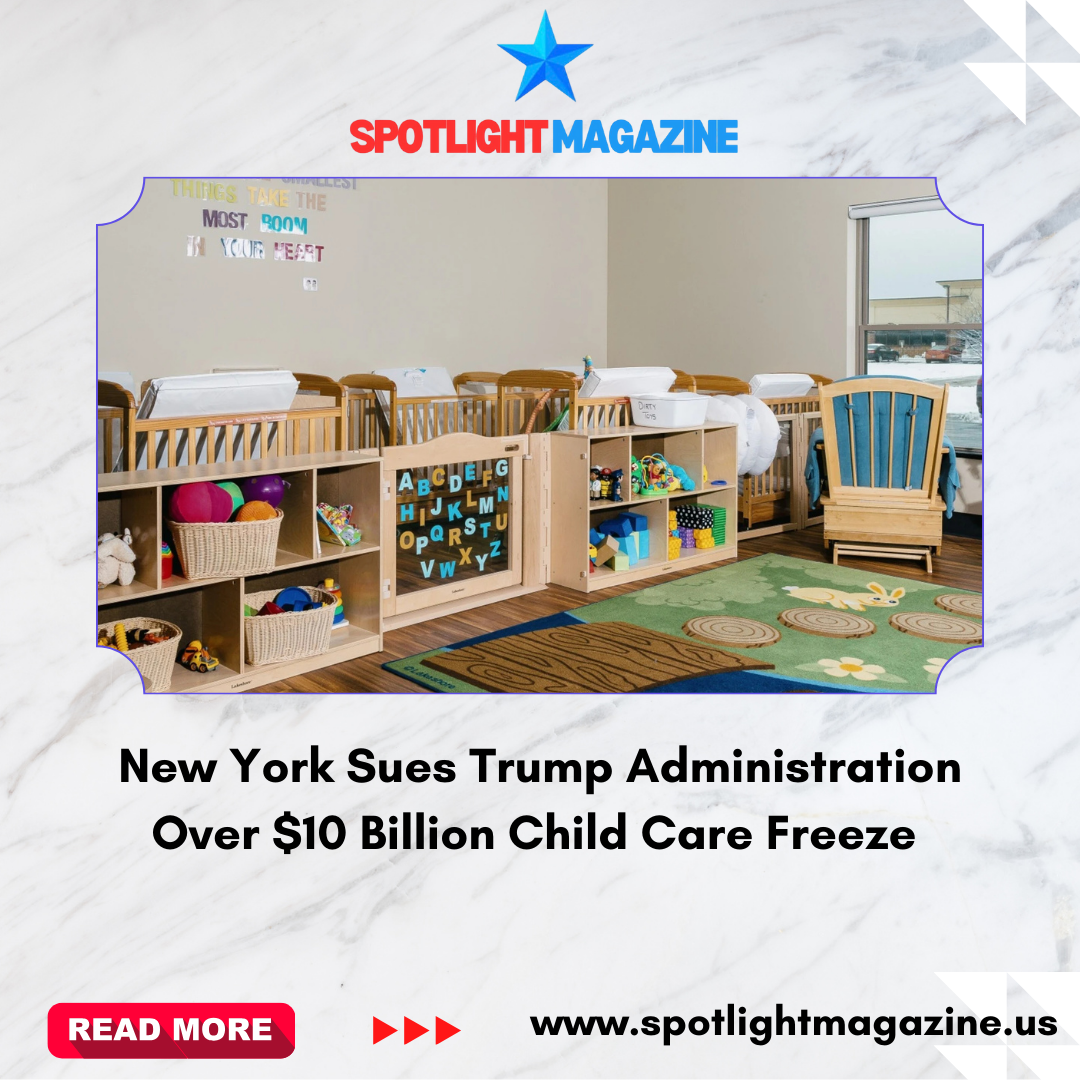
In response to a sudden and massive funding freeze, New York and four other states have filed a federal lawsuit against the Trump administration to reclaim over $10 billion in essential aid. The legal battle began after the Department of Health and Human Services (HHS) abruptly blocked access to funds originally intended to support child care and low-income families.
The administration justified the move by claiming there are serious concerns about widespread fraud and the potential misuse of taxpayer dollars. Officials specifically pointed to allegations that benefits in certain states were being funneled to non-citizens. However, the states—New York, California, Colorado, Illinois, and Minnesota—argue that these claims are unproven and that the freeze is a form of political retaliation against Democratic leaders.
At the heart of the dispute are three major social safety net programs. The first is the Child Care and Development Fund, which helps over a million children nationwide access safe care while their parents work. The second is the Temporary Assistance for Needy Families (TANF) program, which provides a lifeline for the country’s most vulnerable people to pay for basic necessities like food, rent, and clothing. Finally, the freeze affects the Social Services Block Grant, which supports foster care and programs designed to prevent the abuse and neglect of children and seniors.
For New York alone, the impact is staggering. State officials warn that the loss of billions of dollars could leave over 120,000 children in New York City without child care assistance almost overnight. Governor Kathy Hochul and Attorney General Letitia James have condemned the administration’s actions, calling them “cruel” and “vindictive.” They argue that the federal government is using innocent children as “political pawns” in a larger feud with blue-state governors.
The lawsuit asserts that the administration does not have the legal authority to unilaterally withhold money that has already been approved by Congress. Under the U.S. Constitution, Congress holds the “power of the purse,” meaning the president cannot simply decide to stop spending money that was legally allocated for specific programs. The states are asking a federal judge to declare the freeze unlawful and to force the immediate release of the funds.
Beyond the immediate legal questions, experts are worried about a “catastrophic” ripple effect on the economy. If parents lose their child care subsidies, many will be forced to leave their jobs to stay home with their children. This would lead to a shortage of workers for local businesses and a sharp drop in income for families who are already struggling to get by. Without TANF support, thousands of families may also face the threat of eviction or hunger.
The administration has stated that states can regain access to the money if they provide extensive new documentation to prove there is no fraud. However, state officials say they were never required to collect this specific data before and that gathering it could take months. They believe this “extra documentation” is a delay tactic intended to make the funding cuts permanent. As the case moves through the court system, families across the five states remain in a state of limbo, waiting to see if the support they rely on will disappear.