
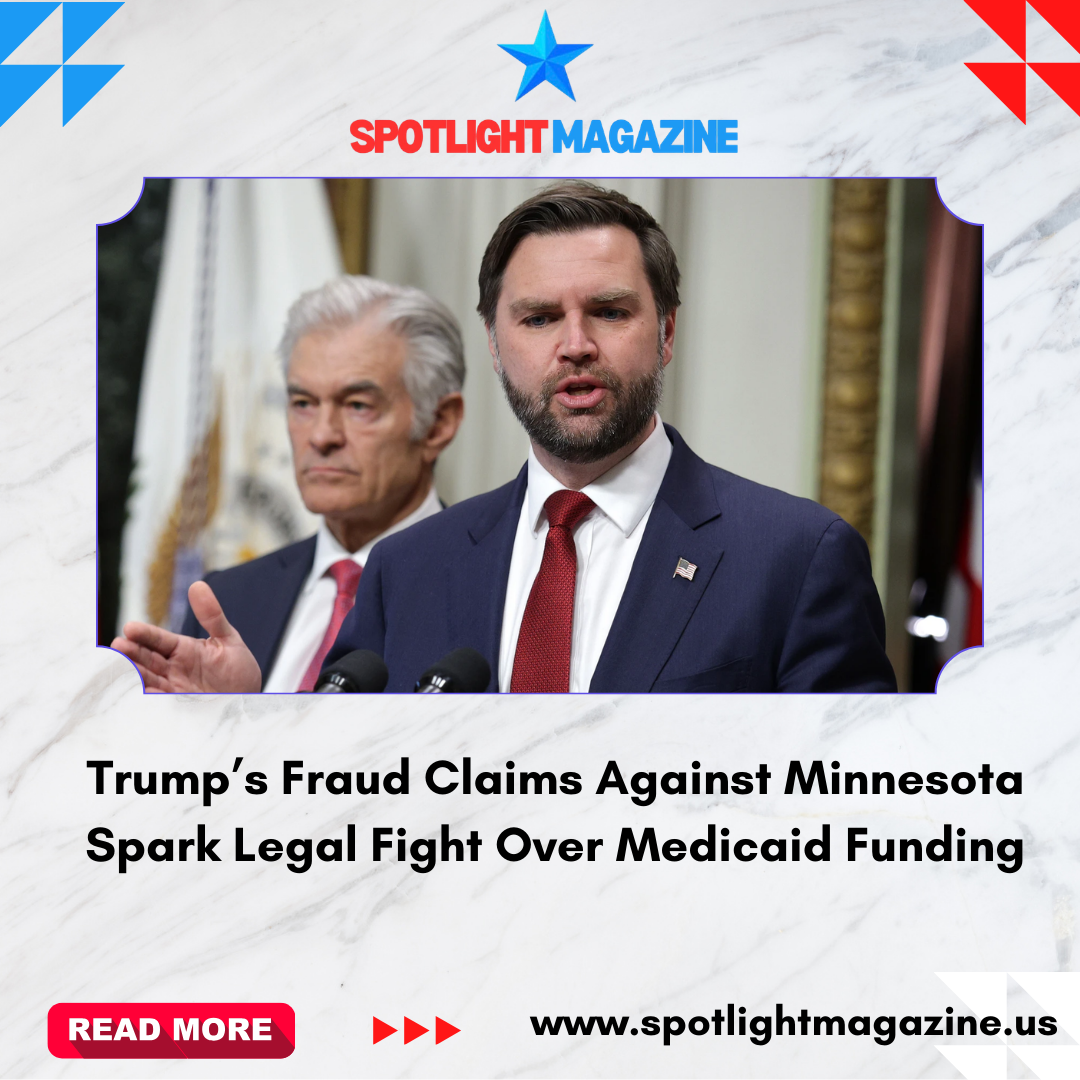
Minnesota has filed a lawsuit against the administration of former President Donald Trump after federal officials decided to cut off some Medicaid funding to the state, claiming there was widespread fraud in Minnesota’s public assistance programs. Legal experts and state officials argue that the federal government’s actions are not likely to reduce fraud but could weaken the authority and independence of state governments.
The dispute began when federal officials accused Minnesota of failing to properly prevent fraud in programs such as Medicaid and food assistance. As part of what the administration described as a broader campaign against government fraud, federal agencies announced they would halt certain Medicaid payments to the state. The decision immediately drew criticism from Minnesota leaders, who say the move is politically motivated and based on misleading claims.
According to legal experts, the federal government’s approach relies heavily on public accusations and pressure rather than evidence of systemic problems. Officials in Washington have released letters and statements criticizing Minnesota’s handling of social service programs and demanding changes. However, critics say these communications exaggerate the scale of the issue and misrepresent how federal and state oversight systems actually work.
In reality, Minnesota’s performance in monitoring public assistance programs appears to be relatively strong compared with other states. Data released by federal agencies shows that Minnesota’s error rate in the Supplemental Nutrition Assistance Program (SNAP), the country’s largest food assistance program, is below the national average. Some states with higher error rates have not faced the same level of criticism or financial pressure from the federal government.
One of the main examples cited by critics of Minnesota is the “Feeding Our Future” scandal, a nonprofit organization that falsely claimed reimbursement for meals it said were served during the COVID-19 pandemic. The scheme took place between 2020 and 2022 and involved millions of dollars in fraudulent claims. While the case was serious, state officials argue it does not represent a broader pattern of fraud across Minnesota’s programs.
Investigations into the scandal were already underway years before the latest political conflict. Minnesota agencies worked with federal prosecutors and the U.S. Department of Justice to uncover the fraud. Dozens of individuals connected to the scheme were charged or convicted, and authorities dismantled the operation. By the time Trump returned to office in 2025, much of the investigative work had already been completed.
Experts say this case actually demonstrates that existing oversight systems can work effectively. Federal and state governments have multiple layers of accountability to monitor public programs. For example, states must audit their own operations, and federal agencies then review those audits to ensure accuracy and compliance with federal rules. These procedures are designed to identify problems and prevent misuse of funds.
Critics argue that using funding cuts as a punishment may harm vulnerable residents rather than stop fraud. Medicaid provides healthcare coverage for low-income individuals and families, and withholding funds could disrupt services for people who depend on the program. State officials say fraud should be addressed through investigations, prosecutions, and improved oversight—not through actions that could destabilize public programs.
Legal scholars also warn that the federal government’s approach could weaken the balance of power between Washington and the states. If federal officials can suspend funding based on disputed accusations, states may lose the ability to manage programs effectively or make policy decisions tailored to their residents. Over time, this could erode the traditional partnership between federal and state governments that supports programs like Medicaid and food assistance.
Minnesota’s lawsuit aims to restore the withheld funding and challenge what state leaders see as an abuse of federal authority. The outcome of the case could shape how much power the federal government has to intervene in state-run programs in the future. For now, the conflict highlights a growing debate over how to fight fraud while protecting the role of states in managing essential public services.