
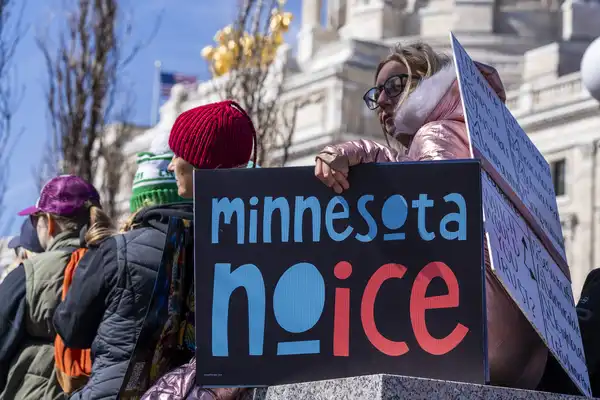
The Minnesota DFL immigration campaign has gained renewed visibility following a surge in federal immigration enforcement, but questions remain about whether the issue will remain central in upcoming elections. According to recent reporting, Democratic-Farmer-Labor (DFL) leaders are increasingly framing immigration as a defining political issue in response to heightened federal activity in the state.
The shift follows what officials and analysts describe as a significant ICE surge Minnesota operation earlier this year, which drew widespread attention and public reaction. The enforcement effort, known as Operation Metro Surge, involved thousands of arrests and a heavy federal presence in the Minneapolis–Saint Paul area, prompting protests and legal challenges from state authorities.
According to political observers, the DFL’s approach reflects a broader effort to respond to community concerns raised during the enforcement period. Reports suggest that many Democratic leaders have positioned themselves as advocates for immigrant communities, emphasizing civil rights, due process, and local autonomy in the face of federal actions. At the same time, Minnesota Governor Tim Walz has publicly criticized aspects of the federal crackdown and highlighted its social and economic impact, according to recent coverage.
However, the long-term effectiveness of the Minnesota DFL immigration campaign remains uncertain. Analysts note that immigration politics US debates can be highly fluid, often influenced by shifting national narratives, economic conditions, and voter priorities. While the issue has gained prominence following the ICE surge, it is not clear whether it will maintain the same level of urgency as election cycles progress.
Republican lawmakers in Minnesota have taken a different stance, generally supporting stricter enforcement measures and aligning more closely with federal immigration policies. Reports indicate that this contrast has reinforced a partisan divide, with immigration emerging as a key point of differentiation between parties.
Political experts suggest that the sustainability of the DFL strategy immigration focus may depend on how voters perceive its relevance compared to other pressing issues such as the economy, public safety, and healthcare. Early indications show that immigration has energized certain segments of the electorate, particularly in urban areas directly affected by enforcement actions. However, its broader appeal across the state remains an open question.
The Minnesota elections issues landscape is expected to evolve in the coming months, with campaigns likely to adjust messaging in response to public opinion and emerging developments. Observers caution that while immigration is currently a visible topic, electoral outcomes often depend on a combination of factors rather than a single issue.
As the political environment develops, the Minnesota DFL immigration campaign highlights how local events can shape broader policy debates. Whether this focus endures will likely depend on continued public engagement, policy developments, and the shifting priorities of voters across the state.