
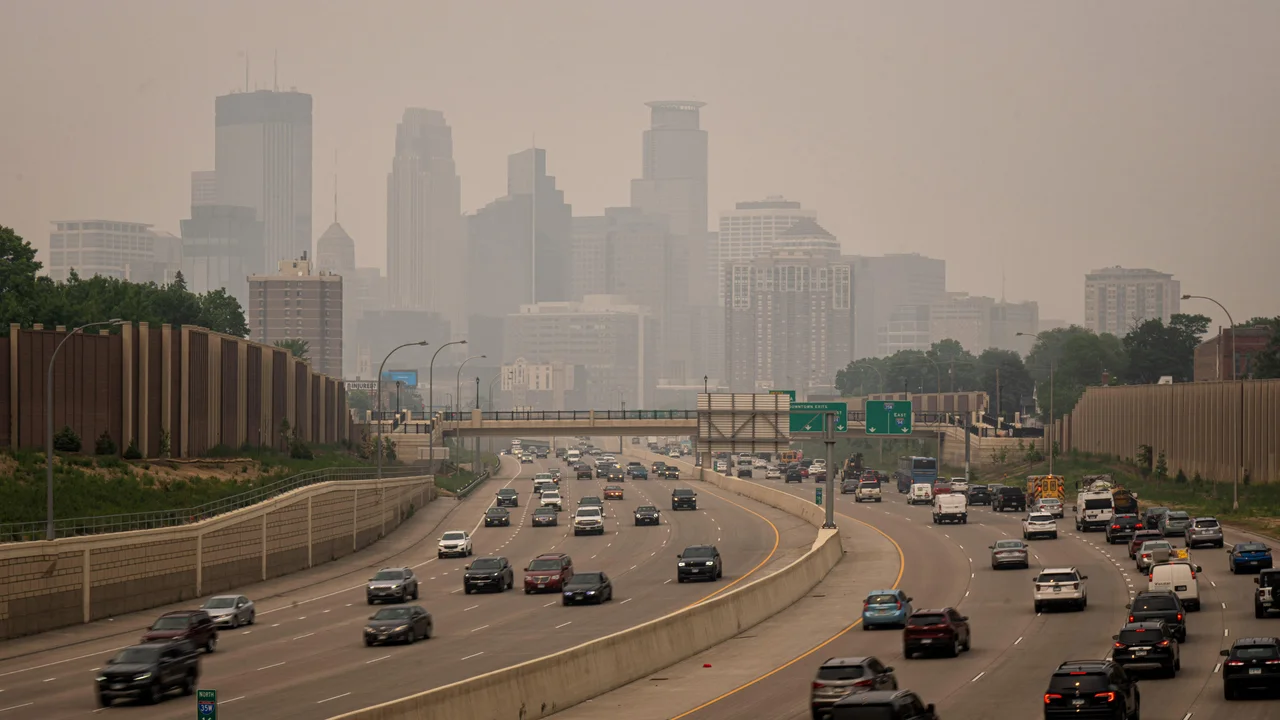
A Twin Cities ozone alert has prompted health and environmental officials to advise residents to stay indoors when possible, warning that common face masks do not provide effective protection against ground-level ozone pollution. The alert marks the first ozone-related air quality warning of the year in the Minneapolis-St. Paul area.
According to the Minnesota Pollution Control Agency, ozone levels in the metro area are expected to reach levels considered unhealthy for sensitive groups, including people with asthma, chronic lung conditions, children, teenagers, and individuals engaging in prolonged outdoor activity. Officials say warm temperatures, strong sunshine, and low humidity have created conditions that allow pollutants from vehicle exhaust and industrial emissions to react in the atmosphere and form ground-level ozone.
Unlike wildfire smoke, ground-level ozone Minnesota pollution is a gas rather than a particle. Air quality experts say this distinction is important because masks commonly used for smoke, dust, or airborne particles are generally not designed to filter ozone gas. One air quality forecaster told local media that staying indoors is the most effective way to reduce exposure during periods of elevated ozone levels.
The air quality alert Twin Cities warning was issued for the afternoon and evening hours, when ozone concentrations tend to peak due to sunlight-driven chemical reactions. Officials note that ozone levels typically decrease after sunset, making early morning and later evening periods less risky for outdoor activities.
Health experts say ozone health risks Minnesota residents face can include throat irritation, coughing, shortness of breath, wheezing, and difficulty breathing deeply. People with existing respiratory conditions may experience stronger symptoms and are encouraged to follow treatment plans and keep rescue inhalers available if needed.
The Minnesota Pollution Control Agency ozone advisory also recommends reducing strenuous outdoor exercise, avoiding pollution sources such as wood fires, and limiting unnecessary vehicle use when possible. Officials say these steps can help reduce both personal exposure and overall pollution levels that contribute to ozone formation.
Authorities emphasize that the current alert is not related to wildfire smoke, even though air quality warnings in recent years have often been linked to Canadian wildfires. Instead, this episode is tied to local weather conditions that favor ozone production.
As temperatures remain elevated, forecasters say additional ozone alerts could be issued if similar weather patterns continue in the coming days.