
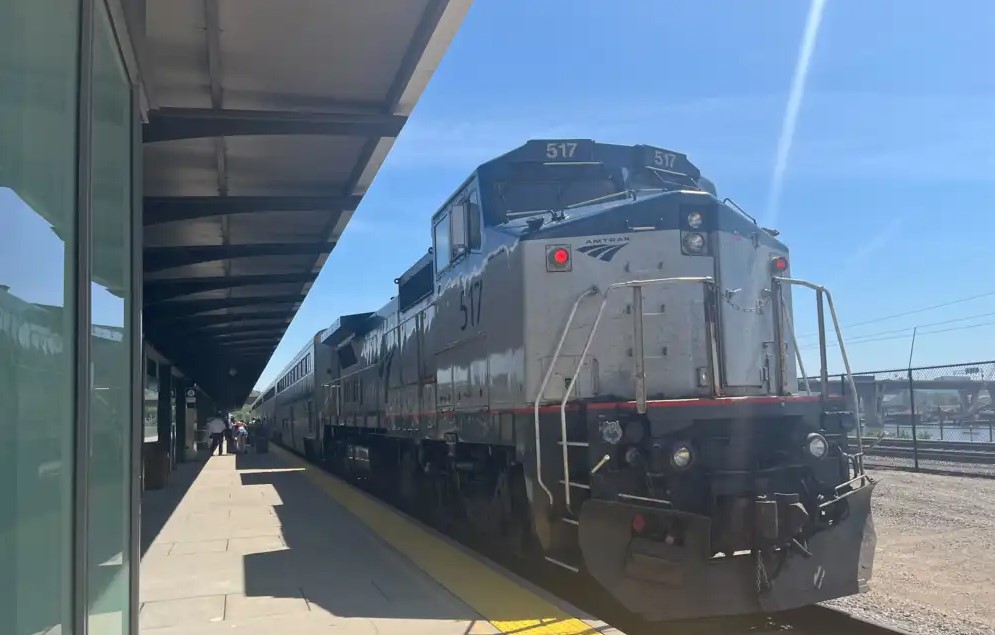
The Amtrak Borealis train service has officially transformed the landscape of Midwest rail travel by fueling an unprecedented surge in passenger volume between Minnesota, Wisconsin, and Illinois. According to updated performance metrics released by state and federal transportation officials to commemorate the line’s second full year of service, the highly popular route has now successfully carried more than 416,000 riders since its initial mid-2024 launch. This massive passenger influx has drastically outperformed all original feasibility projections, which had conservatively estimated that the line would attract roughly 155,000 riders on an annual basis. Instead, the mid-day roundtrip service has quickly become a premier fixture of regional transit expansion, providing a highly reliable and popular alternative to heavy interstate driving.
The rapid economic success of the route underscores the immense public demand for reliable state-sponsored rail infrastructure linking major Midwestern metropolitan hubs. Financed through a cooperative tri-state partnership involving the Minnesota, Wisconsin, and Illinois departments of transportation, the 411-mile corridor connects Saint Paul’s Union Depot directly to Chicago’s Union Station. Data indicators reveal that the introduction of the daily roundtrip has effectively supercharged the broader passenger rail corridors of the region. When integrated alongside Amtrak’s pre-existing Empire Builder and the regional Hiawatha Service between Milwaukee and Chicago, total corridor ridership has expanded by an astonishing 27 percent over a brief two-year span, now rapidly approaching nearly 1.8 million passengers annually.
This explosive growth trajectory has forced transit authorities to quickly shift focus from basic marketing initiatives toward tackling urgent capacity limits. Rail advocates note that the line’s immense popularity has resulted in consistent passenger sellouts, with peak weekend configurations and summer travel windows routinely filling every single available seat onboard. In response to this high demand, state planners and Amtrak operators have publicly initiated joint logistical strategies to actively source and attach extra passenger coaches to the daily train consists, allowing the line to absorb thousands of additional prospective travelers who are currently turned away during peak rush periods.
Beyond merely shifting commuters off gridlocked state highways, the cross-border line has delivered measurable economic benefits to smaller intermediate municipalities along the Mississippi River, generating an influx of eco-tourism dollars for historic platform towns like Winona and La Crosse. Federal Railroad Administration officials assert that the overwhelming success of the project serves as a definitive nationwide proof-of-concept for localized transit funding mechanisms. As tri-state leadership continues executing long-term track improvements alongside host freight railroads to maximize on-time arrival rates, the undeniable success of the Amtrak Borealis has established a vital structural blueprint that will undoubtedly influence the future design of emerging regional rail networks across the United States.