
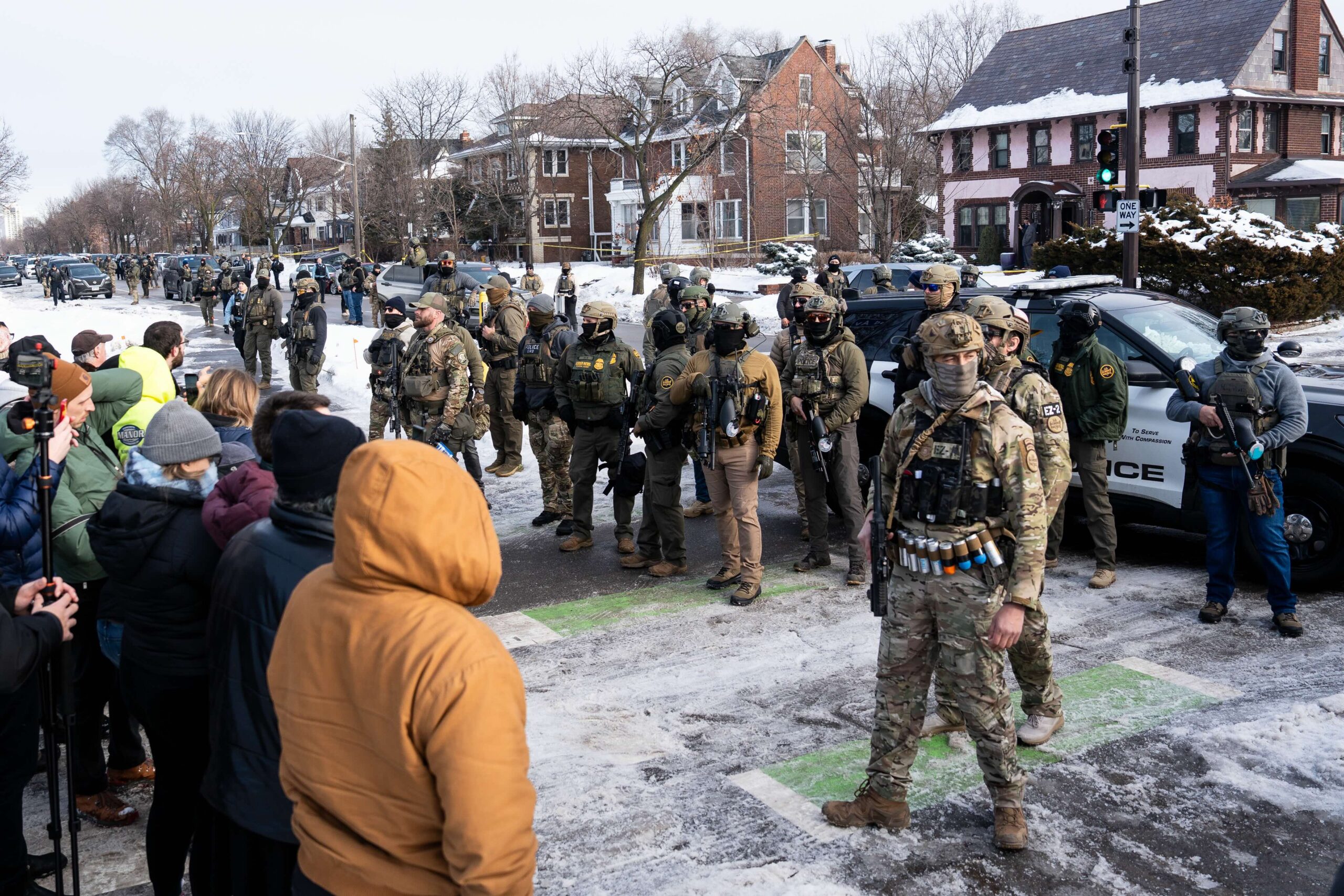
Three months after the end of “Operation Metro Surge,” many immigrants in Minnesota—particularly within Somali communities in the Twin Cities—continue to report lingering fear, uncertainty, and disrupted daily routines. The Operation Metro Surge Minnesota immigrants fear situation has persisted even after federal enforcement activity reportedly scaled down, according to local reporting and community accounts.
Operation Metro Surge, a large-scale federal immigration enforcement campaign carried out in late 2025 and early 2026, involved thousands of federal agents deployed to Minnesota. According to reporting and public data compiled during and after the operation, it led to thousands of arrests and widespread disruption across neighbourhoods in Minneapolis and St. Paul. While officials described it as a crackdown on immigration violations, advocacy groups and journalists documented broader community impacts, including concerns about racial profiling and collateral detentions.
Community organisations say the effects have not ended with the operation itself. In neighbourhoods with large Somali populations, residents report continuing anxiety about workplace inspections, traffic stops, and encounters with immigration authorities. According to reporting from local and national media, some families have adjusted their routines—limiting travel, avoiding public spaces, and relying more heavily on community networks for safety information.
Advocates argue that the psychological impact has outlasted the physical presence of federal agents. They describe a climate of “self-protective isolation,” where even individuals with legal residency or citizenship remain cautious due to fears of mistaken detention or documentation checks. These concerns have been echoed in multiple community reports and civil society statements, though officials have not confirmed ongoing enforcement activity at the same scale as during the peak of the operation.
According to earlier investigations into Operation Metro Surge, the enforcement drive initially targeted individuals without legal status but also resulted in broader “collateral” arrests in some cases, raising concerns among legal observers about enforcement practices and due process. Rights groups say this has contributed to lasting mistrust between some immigrant communities and law enforcement institutions.
Local leaders in Minnesota have acknowledged ongoing tensions, particularly in areas where large immigrant populations live alongside heightened political debate over immigration policy. However, official agencies have not issued recent statements confirming renewed large-scale operations under the same framework as Operation Metro Surge.
Experts note that the long-term effects of such enforcement campaigns often extend beyond immediate arrests or policy outcomes. Fear, they say, can persist in communities long after operational activity ends, shaping behaviour, mental health, and trust in public institutions.
For many Somali immigrants in Minnesota, the situation remains complex: daily life continues, but with heightened caution. While the operation itself may have formally ended, its social and psychological impact continues to influence how some residents navigate their communities.