
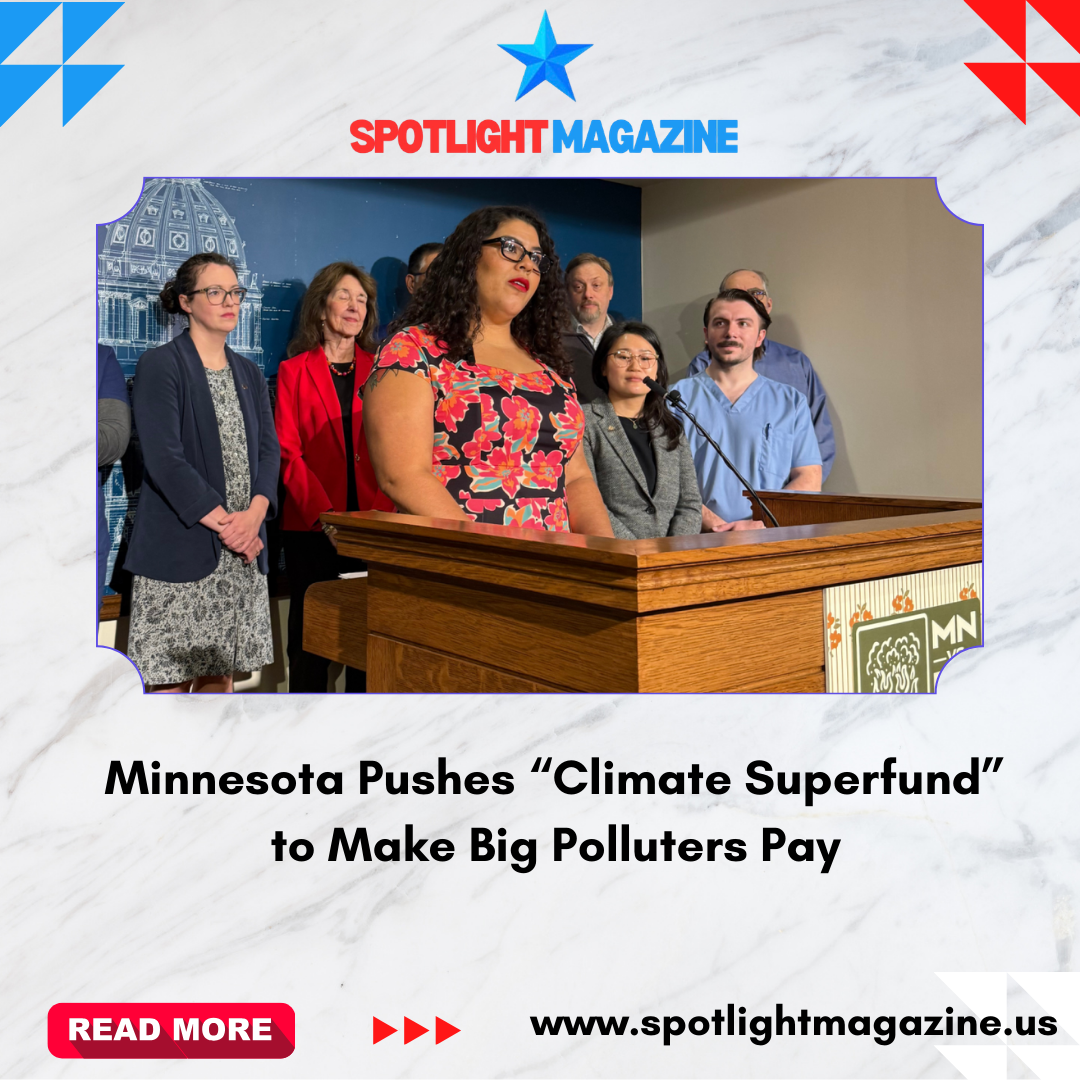
Minnesota lawmakers are trying to pass a new climate law that would make big polluters pay for the damage they’ve caused. This proposal, introduced in the state Senate by Minnesota Democrats, would set up what supporters are calling a “climate superfund” — inspired by the federal Superfund program that makes companies pay to clean up toxic waste sites. The idea is to take the same responsibility model and use it to hold large oil, gas, and coal companies financially accountable for climate pollution.
Under the plan, the state would figure out how much harm companies have caused by releasing greenhouse gases — the heat-trapping pollution that warms the planet — and then send them a bill to cover costs the state has faced because of that damage. Money collected would help pay for things like rebuilding after natural disasters, fixing roads and bridges hurt by flooding, and supporting public health programs tied to pollution.
Supporters of this idea say climate change is already affecting life in Minnesota. They point to more frequent heavy rainfalls and flash flooding that strain local systems like storm drains and roads. Climate scientists say burning fossil fuels has helped push global warming, which in turn changes rainfall patterns and increases extreme weather.
Representative Athena Hollins, one of the main backers of the bill, says the people who suffer most from climate change aren’t the ones who made large profits from fossil fuels. She believes big companies should help pay for the harm that Minnesotans now experience daily. The proposed law would work a bit like the federal Superfund: it would identify responsible entities, calculate damages using scientific data, and collect money to fund solutions and recovery efforts.
Senator Ann Johnson Stewart, a civil engineer, also supports the bill. She argues that climate-related problems like flooding are already costing taxpayers money — for repairs, emergency responses, and rebuilding broken infrastructure. For example, she pointed to the collapse of the Rapidan Dam near Mankato in 2024, a failure blamed partly on heavy rainfall linked to climate change.
Aside from flooding issues, climate change in Minnesota is connected to other risks too. Lawmakers say rising temperatures contribute to the spread of invasive species like the emerald ash borer, a beetle that’s killing millions of ash trees and causing costs for communities and property owners.
Not everyone supports this proposal. Some Republicans in the legislature argue the idea could simply raise prices for consumers. Representative Harry Niska called the measure one of the worst he’s seen, claiming companies might pass extra costs onto customers and that the new fund could be mismanaged or even open to fraud. It’s unclear if the bill could gain support from both parties.
Another issue lawmakers face is legal uncertainty. Similar climate liability laws in other states like New York and Vermont are already being challenged in court. Fossil fuel companies and their supporters argue that states don’t have the power to force them to pay for climate damages this way, and the U.S. Department of Justice is involved in at least some of those disputes.
If Minnesota passes this climate superfund law, it would require the state auditor’s office to build a system for identifying who must pay and figuring out how much they owe. The auditor would also monitor how the money collected is used. The Minnesota Pollution Control Agency would run the program. Lawmakers supporting the bill want a clear and transparent method so people know exactly how damage is measured and how funds are allocated.
Backers hope a version of the bill will also be introduced soon in the Minnesota House of Representatives. If it becomes law, Minnesota would be among a handful of states attempting to hold large fossil fuel companies financially responsible for climate change — a move that could reshape how climate costs are managed at the state level.